Tevel Marketing

Practice Projects

Real Briefs. Actual Writing. Portfolio-Ready Samples.

The masterclass is built around doing. Each practice project simulates a real client brief so the work you produce is genuinely portfolio-worthy — not artificial exercises.

Practice projects are the core of the learning experience. Rather than writing generic exercises, you work through realistic briefs — the kind of requests a new copywriting client might actually send. The deliverables you produce can go directly into a starter portfolio, giving you something concrete to show when you are ready to look for your first clients.

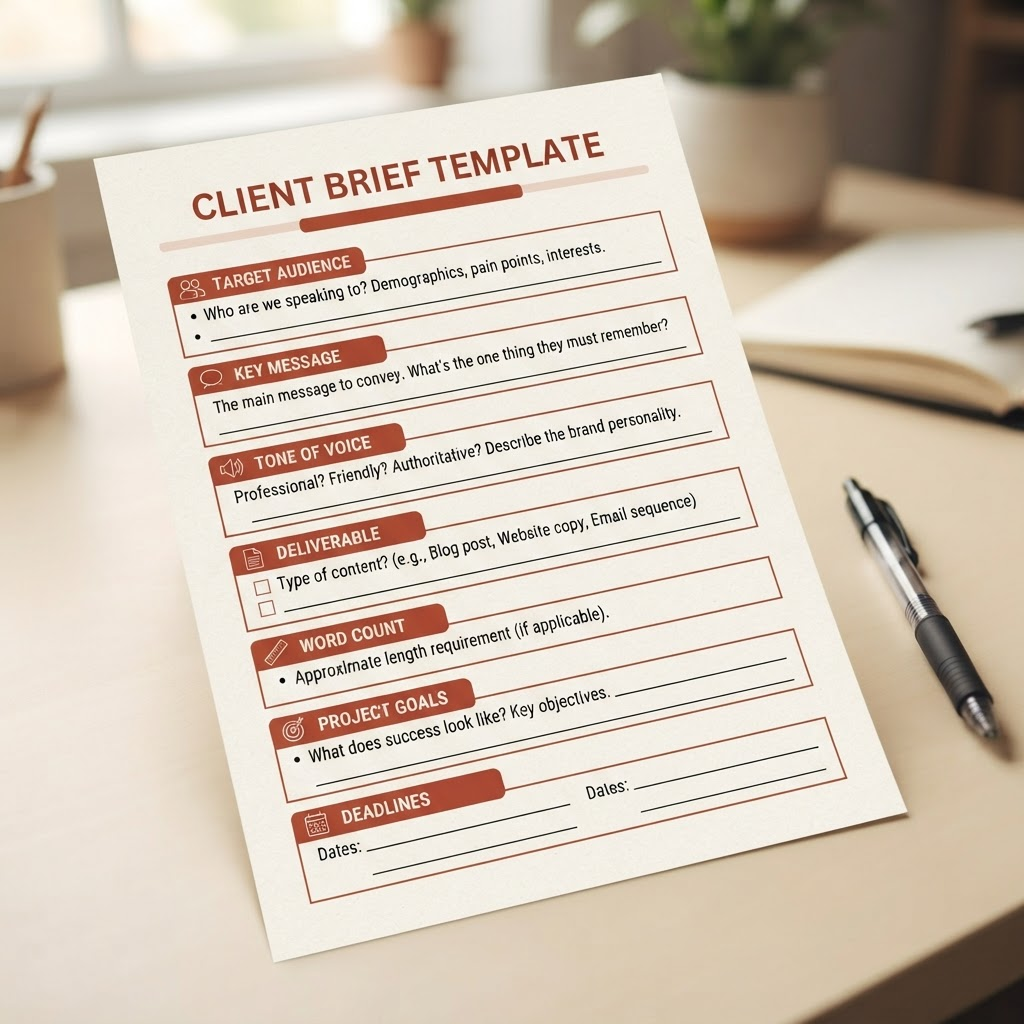
An educational worksheet labeled 'Client Brief Template' showing structured sections for a copywriting project

Each project comes with a structured brief template like the one above (illustrative sample)

Landing Page Section

Difficulty: Beginner

The brief

A small online bookshop needs its homepage rewritten. The current copy is generic and does not explain why someone should buy from them rather than a large retailer.

Your deliverable

Three headlines tested against each other, a 100-word intro block, and a short CTA section.

Skills practised

  • · Headline writing
  • · Value proposition
  • · CTA copy
Why this project: This project is deliberately constrained — a single section, not a full page — so you can focus on the core skill without being overwhelmed by scope.

Product Description Batch

Difficulty: Beginner

The brief

A handmade ceramics maker sells via an online store. Their current product descriptions are plain specifications with no personality. They need five descriptions rewritten to reflect their brand voice.

Your deliverable

Five product descriptions of 60–80 words each, using the voice guidelines in the brief.

Skills practised

  • · Brand voice
  • · Sensory description
  • · Consistency across a batch
Why this project: Batch work teaches consistency — keeping tone, length, and style coherent across multiple pieces. A useful skill for any product-focused client.

Email Welcome Sequence

Difficulty: Intermediate

The brief

A small fitness studio has a new email sign-up on their website. They want a three-email welcome sequence: one immediately after sign-up, one three days later, and one a week after that.

Your deliverable

Three emails with subject lines, preview text, and body copy — each between 120–200 words.

Skills practised

  • · Email structure
  • · Subject line writing
  • · Sequence planning
Why this project: Email sequences are one of the most requested services from small businesses. This project teaches you to plan a narrative across multiple messages, not just write one-off pieces.

Building a starter portfolio

The final module of the masterclass covers how to select and present your best practice samples as a simple portfolio. You do not need a website or a large body of work — two or three strong, well-presented samples are enough to support a first client conversation.

The module includes a portfolio packaging exercise that walks you through choosing which samples to include, writing a brief context note for each one, and presenting them in a clean, readable format.